It's been a long time since I watched Mel Gibson's Passion of the Christ. This Labour Day weekend, I had a chance to watch a video on an interview of the movie's actor, Jim Caviezel. I sat through all 49 minutes of the video, and was drawn to Jim's powerful sharing like Winnie the Pooh was to honey.
To Jim Caviezel, playing the role of Jesus was much more than mere acting. The whole filming process had been a prayerful experience that enabled him to obtain a deeper appreciation of our Lord's complete self-giving love for men and the agony He had to endure to remain steadfast in love until the very end. It was filled with contemplative moments when human consciousness and divine will appeared intertwined - sometimes it's hard to tell which was which. There were times when the experience was so real and his body battered so bad from acting that Jim was all but ready to give up his life on the cross if God's will was for him to do so for the glory of Christ.
In the interview, he described in vivid detail the last scene the filming crew did: the climax of the crucifixion.
He was affixed to the cross which was set on top of a hill. The weather was threatening and the clouds were very low that day as crew members raised up slowly the cross and his body. From atop the cross he scanned the rugged hillside over which the filming crew members scattered. His arms, locked up tight to the cross for a prolonged period of time, were so numb they could have been ripped off and he would not have felt any pain. In spite of the discomfort and the scurries of filming activities happening all around, a strange serenity settled on him to give him an eerie feeling that his body was strategically placed in the eye of a horrendous storm.
The atmosphere was charged and almost surreal. A couple of crew members standing not too far away from him were gazing up at him with tearful eyes. He felt very sick. He thought he might just die right there on the cross. But his concern was not for his safety and physical well-being. His utmost desire was to be able to experience the agony of our Lord to the full. Deep in prayer, he asked God to allow him to share Jesus' suffering on the cross; and if it meant death, then so be it. Then he thought he heard a voice that asked him: "Can you drink this cup that I am drinking?" And he said, "Yes, Lord! Every bit of it!" For there's nothing more meaningful than dying for Christ, he thought. Then suddenly everything lighted up around him as though he was in the centre of an illuminated apparition. Lightning had struck.
On completion of the film, Jim was as badly battered as a sacrificial lamb. During the filming process, he had suffered a dislocated shoulder from carrying the cross, pneumonia, and lightning shocks. His body, normally a hulking physique of 210 pounds, was reduced to a feeble frame of only 168. What's more, he had to undergo heart surgery. "If you want to be Christian, you are in for it," he joked, musing on his hardships.
Don't watch the interview if you are not in a prayerful mood. I don't want to spoil your fun by giving away too much of the interview, but I must remind you not to miss the end where Jim delivered a sermon-like concluding speech and repeated some of the Aramaic scripts in the movie - I can only guess that's what he did as I don't know the language. It was an overpowering performance that took everyone watching right back to the movie to behold once again the familiar image of the Jesus of The Passion; to the love that beamed forth from his face; to the conversing eyes that somehow displayed a trace of sadness: sadness from his suffering no doubt, but even more so sadness for the sins of the world, including yours and mine. It's one of those rare encounters when you don't need to know the speaker's language to appreciate his profound wisdom and irresistible charism.
The organizer of the interview and publisher of the video was the Rock church - an evangelical Christian church in San Diego. Jim Caviezel, as many of you know, is from a closely-knit Catholic family. Enjoy the video:
Jim Caviezel Interview

The heavens declare the glory of God; the sky proclaims its builder's craft (Psalm 19:2). elodocuments is an English/Chinese bi-lingual blog that shares based on the Catholic faith.高天陳述天主的光榮,穹蒼宣揚祂手的化工(詠19:2)。elodocuments 是個用中英語分享天主教信仰的網誌。
Sunday, September 2, 2012


Thursday, August 30, 2012
Late Cardinal of Taiwan - Inspiring Article Written Shortly Before His Death
(Note to reader: The original title of this post ("Late Cardinal of Taiwan - Inspiring Article Written 3 Days Before Death") was incorrect. I do apologize for not verifying the wrong information that the original post title had used until a blog reader pointed it out to me.)
I don't know much about the late Cardinal Paul Shan Kuohsi. But his article below, written shortly before his death, touched me deeply. I have never heard his sermons or read his writings, but this article alone is enough to command a great deal of admiration and respect from me. Let's face it, each one of us may one day go through ordeals similar to his. In particular, he reminded me of my beloved Mom who passed away almost three years ago. Is this kind of experience very difficult? Sure it is, both for the dying person and for the family members. Is this humiliating? Extremely. Is this necessarily a bad thing? I don't think so. Just read the late Cardinal's witness story if you want to know why.
Like Jesus, the strength and holiness of the late Cardinal shone through in the most powerful way just when he was completely crushed by weaknesses and humiliations. "For when I am weak, then I am strong" (2 Corinthians 12:10). As I read his article, the thought that crossed my mind was this: If we are prepared to really follow Jesus, what's there for us to fear? Copied below is his article for your reflection. For blog readers who don't understand Chinese, I'm sorry: English translation is not yet available.
耶穌會在培育自己的會士以及聖職人員方面素負盛 名。藉著聖依納爵的神操和經驗豐富的神 師, 不但給受培育者奠下堅強的神修基礎,而且在 服 裝儀容以及待人接物處世的禮儀和態度等細節都 非 常注意。加入耶穌會將近70年, 聖依納爵神修的大原則和精神以及待人接物和處世的禮儀態度等細 節 已漸漸和我的日常生活整合,並且已漸漸形成一種意識:自己既是會士又是聖職人員,對外則代表 耶穌會和教會,對內則負有牧靈及領導教友福傳的 責任。靈修培育、品格修養、責任感、榮譽意識、學問的追求、做事的認真、重 視效率等,甚至整個人生的目的,按照聖依納爵的原則,都是為「愈顯 主 榮」和「拯救更多人靈」。這些都是「愈顯主榮」和使人接近天主的工具及墊腳石。但是脆弱的人性有時讓人忘記真正目的,而將達成目的工具當作目的追求,以增 加自己的聲譽、權威,受到別人的敬重。如果這樣質變,這些工具不但不能引人達到「愈顯主榮」目的,而且變成了接近天主以及和十字架上「掏空自己」的耶穌結 合為一的絆腳石。
加 入耶穌會將近70年, 每日祈禱、行神業,尤其 晉鐸後,每日 舉行感恩祭,感覺和天主相當接近。但是和胸膛被長槍打開,「掏空自己」(斐理伯書 第2章 第7節), 赤身露體,一絲不掛地懸在十字上垂死的耶穌,卻有一段距離。我只能站在距離祂三個台階的地方,哀傷地觀望祂,卻無法上到山頂祂的十字架傍陪伴祂。在日常祈 禱中,尤其在每年的 避靜中,多次反省 檢討。但是找不出真正的原因。感謝天主給我一個好機會。最近一個月,因治療宿疾,必須住院。住院期間有充足時間祈禱和反省上述問題。在祈禱時,「掏空自 己」、胸膛敞開,一絲不掛,赤身露體懸在十字架上垂死耶穌的形像時 常 出現。同時也有聲音說:「掏空自己,就能登上 加 爾瓦略山頂,和掏空自己的耶穌接近,並且和祂 共融結合為一。」
上 述的異象和聲音使我恍然大悟:原來我穿戴的 服 飾太多太重;耶穌會先賢所創造的偉業和榮譽、 聖 職人員的道袍、主教的權戒高冠、樞機的紅袍禮 服 等,將我整個人包裝得一層又一層,以致使我失去了原形。並且這些服飾已和我的日常生活整合,將其脫去,談何容易。人做不到的,天主做得到。最後只有求天主 伸出強有力的援手為我脫下這些沈重的服飾。天主略施小技,和我開了幾個玩笑,捉弄我一下,讓我出了幾次醜,就把我的問題徹底解決了。前三次醜事記憶猶新, 分別記述如下。6月 底,因肺部積水住進高雄聖功醫院。次日,醫生讓我吃了一種強烈的利尿劑,以便將肺部積水排出。我毫不知情,否則我可以換一下做彌撒的時間。正在舉行聖祭時 藥性發作。開始我強忍,讀經後褲子已尿溼一半,不得不去洗手間,去時地板上也撒滿尿水。這是晉鐸57年來,在舉行彌撒時第1次發生這樣的糗事,使我的尊嚴和顏面 盡失,在修女和醫護人員面前,真感到無地自容。這是天主治療我虛榮心的開始。
第2次出醜是由高雄轉到台北耕莘醫院後 發生的。因為兩天沒有大便,醫生讓我吃一些瀉藥。當天半夜,藥性發作,便叫醒熟睡中的男看護攙扶我去入廁。剛進入化粧室,還未到馬桶前,糞便不自禁地撒在 地板上。男看護不小心踏上一堆糞便。半醒的他滿腹不高興,一邊用水沖自己的拖鞋和地板上的糞便,一邊嘟嚷了許多我聽不懂的話。最後他將我弄髒的睡衣脫下, 讓我赤裸裸地坐在馬桶上,用水沖洗我兩腿上的糞便,同時如同大人訓斥小孩子一樣,教訓我這個九旬老翁:「離馬桶兩三步,你都忍不住!給我添這麼多麻煩!以 後再有同樣情況,要早一點告訴我,幫你早一點下床入廁!……」這時我感覺自己好似剛滿週歲的小孩子,無言以對。他的每句話猶如利刃,將我90年養成的自尊、維護的榮譽、頭 銜、地位、權威、尊嚴等一層層地剝掉了。清洗完備,他攙扶我躺在床上之後,他自己很快呼呼入睡。我卻非常清醒,有脫胎換骨的輕鬆感。現在胸腔被打開,「被 掏空」、赤裸裸懸在十字架上的耶穌又在我腦海中出現,向我微笑,示意和祂接近。我這時感覺自己身輕猶如一隻小袋鼠,一躍便跳到聖山頂十字架下。再一躍,兩 隻前掌已爬到耶穌雙足上。這時仰首看到耶穌還在微笑,並將肋膀聖傷打開,示意叫我跳進去。小袋鼠再一跳,便進入了耶穌洞開的心房中,猶如回到母袋中一樣。 感覺在這裏最安全,最溫暖,完全被耶穌的無限大愛所包圍,感到無限的滿足與幸福。這時,我的理智雖然清醒,但是我也分不清自己是在祈禱或是在做夢。次日早 晨那位男看護還是畢恭畢敬地照顧我, 好似不知夜間那件不愉快的事。感謝天主利用那位男看護不但治癒了我心靈的宿疾,使我煥然一新,恢復了兒童的純樸、天真、謙卑……,而且也治療了從小養成的 羞怯,絕對不要人看到自己赤身一絲不掛。自從那夜被脫去睡衣沖洗糞便以來,這種羞怯已完全消失。現在我纔真正了解耶穌所說的:「你 們若不變成如同小孩子一樣,你們決不能進入天國」(《瑪竇福音》第18章第3節)的意義。
第3次出醜是兩個星期前。那時我剛住進 耶穌會的頤福園內。因為腳水腫,早飯後,醫護人員在我不知 情下,讓我吃一種強烈的排尿劑。但是那一天上午9時30分 我必須去耕莘醫院接受放射性治療。一個排尿器具都沒有準備。在去醫院的途中藥性發作,強忍了10分鐘,但終於不能再忍下去,便尿溼 了半條褲子和輪椅上的坐墊。到了醫院後又要排隊入廁時,又有尿液排出,褲子更溼。就這樣上了腫瘤科放射台,醫護和技術人員看得很清楚,這時的我,連最後的 一點尊嚴也喪失了。其實九旬病翁一生所累積的榮譽、頭銜、地位、權威、尊重、敬愛等,對於牧靈、福傳、拯救人靈、愈顯主榮,雖然有了不少助益,但是有時, 至少在下意識裡,讓他自滿,洋洋得意,有時甚至成了他追求的目標。如此,這些「愈顯主榮」的墊腳石,反而成了他親近「掏空自己」一絲不掛懸在十字架之耶穌 的絆腳石。
感 謝仁慈天父用大能強力的手,將我從靈修途中的泥淖中拉出,並將絆腳石為我變成墊腳石。感謝「掏空自己」的天主聖子收納我,容許我和祂親密接近結合,甚至讓 我猶如小袋鼠一樣,隨時可以鑽入祂肋膀的聖傷內。感謝天主聖神用強烈的勁風,摧枯拉朽,將我這棵老樹枯枝上所留下幾片阻礙我和「掏空自己」之殘葉吹得淨 盡,連從小養成的羞怯及矜持自尊的性格也吹得無踪無影,使我煥然一新,返老還童。
上 述的親身經驗,使我領悟到靈修生活中三項重要事實:(一)如願和「掏空自己」或「使自己空虛」”HE EMPTIED HIMSELF”(《斐理伯書》第 2章第7節),一絲不掛,懸在十字架上的耶穌親密接近,結合為一,就必須仰賴天主助佑 先「掏空自己」。(二)慈愛的天主有時也給人開玩笑,讓人出幾次醜,就能治癒心靈的宿疾,清除靈修途中的障礙及絆腳石,甚至改變人自小養成不利靈修的積 習。(三)返老還童,讓身患絕症的九旬老翁,在數天內回歸兒童時的純樸天真無邪,掃除多年積累不利靈修的習性。這事「為 人是不可能的,但為天主一切都是可能的」(《瑪竇福音》第19章第 26節)。耶穌所說的:「你 們若不變成如同小孩子一樣,你們決不能進入天國」(《瑪竇福音》第18章第3節),確實是靈修生活不可或缺的一個 重要條件。
2012年7月31日 聖依納爵慶節 完稿於頤福園
I don't know much about the late Cardinal Paul Shan Kuohsi. But his article below, written shortly before his death, touched me deeply. I have never heard his sermons or read his writings, but this article alone is enough to command a great deal of admiration and respect from me. Let's face it, each one of us may one day go through ordeals similar to his. In particular, he reminded me of my beloved Mom who passed away almost three years ago. Is this kind of experience very difficult? Sure it is, both for the dying person and for the family members. Is this humiliating? Extremely. Is this necessarily a bad thing? I don't think so. Just read the late Cardinal's witness story if you want to know why.
Like Jesus, the strength and holiness of the late Cardinal shone through in the most powerful way just when he was completely crushed by weaknesses and humiliations. "For when I am weak, then I am strong" (2 Corinthians 12:10). As I read his article, the thought that crossed my mind was this: If we are prepared to really follow Jesus, what's there for us to fear? Copied below is his article for your reflection. For blog readers who don't understand Chinese, I'm sorry: English translation is not yet available.
耶穌會在培育自己的會士以及聖職人員方面素負盛 名。藉著聖依納爵的神操和經驗豐富的神 師, 不但給受培育者奠下堅強的神修基礎,而且在 服 裝儀容以及待人接物處世的禮儀和態度等細節都 非 常注意。加入耶穌會將近70年, 聖依納爵神修的大原則和精神以及待人接物和處世的禮儀態度等細 節 已漸漸和我的日常生活整合,並且已漸漸形成一種意識:自己既是會士又是聖職人員,對外則代表 耶穌會和教會,對內則負有牧靈及領導教友福傳的 責任。靈修培育、品格修養、責任感、榮譽意識、學問的追求、做事的認真、重 視效率等,甚至整個人生的目的,按照聖依納爵的原則,都是為「愈顯 主 榮」和「拯救更多人靈」。這些都是「愈顯主榮」和使人接近天主的工具及墊腳石。但是脆弱的人性有時讓人忘記真正目的,而將達成目的工具當作目的追求,以增 加自己的聲譽、權威,受到別人的敬重。如果這樣質變,這些工具不但不能引人達到「愈顯主榮」目的,而且變成了接近天主以及和十字架上「掏空自己」的耶穌結 合為一的絆腳石。
加 入耶穌會將近70年, 每日祈禱、行神業,尤其 晉鐸後,每日 舉行感恩祭,感覺和天主相當接近。但是和胸膛被長槍打開,「掏空自己」(斐理伯書 第2章 第7節), 赤身露體,一絲不掛地懸在十字上垂死的耶穌,卻有一段距離。我只能站在距離祂三個台階的地方,哀傷地觀望祂,卻無法上到山頂祂的十字架傍陪伴祂。在日常祈 禱中,尤其在每年的 避靜中,多次反省 檢討。但是找不出真正的原因。感謝天主給我一個好機會。最近一個月,因治療宿疾,必須住院。住院期間有充足時間祈禱和反省上述問題。在祈禱時,「掏空自 己」、胸膛敞開,一絲不掛,赤身露體懸在十字架上垂死耶穌的形像時 常 出現。同時也有聲音說:「掏空自己,就能登上 加 爾瓦略山頂,和掏空自己的耶穌接近,並且和祂 共融結合為一。」
上 述的異象和聲音使我恍然大悟:原來我穿戴的 服 飾太多太重;耶穌會先賢所創造的偉業和榮譽、 聖 職人員的道袍、主教的權戒高冠、樞機的紅袍禮 服 等,將我整個人包裝得一層又一層,以致使我失去了原形。並且這些服飾已和我的日常生活整合,將其脫去,談何容易。人做不到的,天主做得到。最後只有求天主 伸出強有力的援手為我脫下這些沈重的服飾。天主略施小技,和我開了幾個玩笑,捉弄我一下,讓我出了幾次醜,就把我的問題徹底解決了。前三次醜事記憶猶新, 分別記述如下。6月 底,因肺部積水住進高雄聖功醫院。次日,醫生讓我吃了一種強烈的利尿劑,以便將肺部積水排出。我毫不知情,否則我可以換一下做彌撒的時間。正在舉行聖祭時 藥性發作。開始我強忍,讀經後褲子已尿溼一半,不得不去洗手間,去時地板上也撒滿尿水。這是晉鐸57年來,在舉行彌撒時第1次發生這樣的糗事,使我的尊嚴和顏面 盡失,在修女和醫護人員面前,真感到無地自容。這是天主治療我虛榮心的開始。
第2次出醜是由高雄轉到台北耕莘醫院後 發生的。因為兩天沒有大便,醫生讓我吃一些瀉藥。當天半夜,藥性發作,便叫醒熟睡中的男看護攙扶我去入廁。剛進入化粧室,還未到馬桶前,糞便不自禁地撒在 地板上。男看護不小心踏上一堆糞便。半醒的他滿腹不高興,一邊用水沖自己的拖鞋和地板上的糞便,一邊嘟嚷了許多我聽不懂的話。最後他將我弄髒的睡衣脫下, 讓我赤裸裸地坐在馬桶上,用水沖洗我兩腿上的糞便,同時如同大人訓斥小孩子一樣,教訓我這個九旬老翁:「離馬桶兩三步,你都忍不住!給我添這麼多麻煩!以 後再有同樣情況,要早一點告訴我,幫你早一點下床入廁!……」這時我感覺自己好似剛滿週歲的小孩子,無言以對。他的每句話猶如利刃,將我90年養成的自尊、維護的榮譽、頭 銜、地位、權威、尊嚴等一層層地剝掉了。清洗完備,他攙扶我躺在床上之後,他自己很快呼呼入睡。我卻非常清醒,有脫胎換骨的輕鬆感。現在胸腔被打開,「被 掏空」、赤裸裸懸在十字架上的耶穌又在我腦海中出現,向我微笑,示意和祂接近。我這時感覺自己身輕猶如一隻小袋鼠,一躍便跳到聖山頂十字架下。再一躍,兩 隻前掌已爬到耶穌雙足上。這時仰首看到耶穌還在微笑,並將肋膀聖傷打開,示意叫我跳進去。小袋鼠再一跳,便進入了耶穌洞開的心房中,猶如回到母袋中一樣。 感覺在這裏最安全,最溫暖,完全被耶穌的無限大愛所包圍,感到無限的滿足與幸福。這時,我的理智雖然清醒,但是我也分不清自己是在祈禱或是在做夢。次日早 晨那位男看護還是畢恭畢敬地照顧我, 好似不知夜間那件不愉快的事。感謝天主利用那位男看護不但治癒了我心靈的宿疾,使我煥然一新,恢復了兒童的純樸、天真、謙卑……,而且也治療了從小養成的 羞怯,絕對不要人看到自己赤身一絲不掛。自從那夜被脫去睡衣沖洗糞便以來,這種羞怯已完全消失。現在我纔真正了解耶穌所說的:「你 們若不變成如同小孩子一樣,你們決不能進入天國」(《瑪竇福音》第18章第3節)的意義。
第3次出醜是兩個星期前。那時我剛住進 耶穌會的頤福園內。因為腳水腫,早飯後,醫護人員在我不知 情下,讓我吃一種強烈的排尿劑。但是那一天上午9時30分 我必須去耕莘醫院接受放射性治療。一個排尿器具都沒有準備。在去醫院的途中藥性發作,強忍了10分鐘,但終於不能再忍下去,便尿溼 了半條褲子和輪椅上的坐墊。到了醫院後又要排隊入廁時,又有尿液排出,褲子更溼。就這樣上了腫瘤科放射台,醫護和技術人員看得很清楚,這時的我,連最後的 一點尊嚴也喪失了。其實九旬病翁一生所累積的榮譽、頭銜、地位、權威、尊重、敬愛等,對於牧靈、福傳、拯救人靈、愈顯主榮,雖然有了不少助益,但是有時, 至少在下意識裡,讓他自滿,洋洋得意,有時甚至成了他追求的目標。如此,這些「愈顯主榮」的墊腳石,反而成了他親近「掏空自己」一絲不掛懸在十字架之耶穌 的絆腳石。
感 謝仁慈天父用大能強力的手,將我從靈修途中的泥淖中拉出,並將絆腳石為我變成墊腳石。感謝「掏空自己」的天主聖子收納我,容許我和祂親密接近結合,甚至讓 我猶如小袋鼠一樣,隨時可以鑽入祂肋膀的聖傷內。感謝天主聖神用強烈的勁風,摧枯拉朽,將我這棵老樹枯枝上所留下幾片阻礙我和「掏空自己」之殘葉吹得淨 盡,連從小養成的羞怯及矜持自尊的性格也吹得無踪無影,使我煥然一新,返老還童。
上 述的親身經驗,使我領悟到靈修生活中三項重要事實:(一)如願和「掏空自己」或「使自己空虛」”HE EMPTIED HIMSELF”(《斐理伯書》第 2章第7節),一絲不掛,懸在十字架上的耶穌親密接近,結合為一,就必須仰賴天主助佑 先「掏空自己」。(二)慈愛的天主有時也給人開玩笑,讓人出幾次醜,就能治癒心靈的宿疾,清除靈修途中的障礙及絆腳石,甚至改變人自小養成不利靈修的積 習。(三)返老還童,讓身患絕症的九旬老翁,在數天內回歸兒童時的純樸天真無邪,掃除多年積累不利靈修的習性。這事「為 人是不可能的,但為天主一切都是可能的」(《瑪竇福音》第19章第 26節)。耶穌所說的:「你 們若不變成如同小孩子一樣,你們決不能進入天國」(《瑪竇福音》第18章第3節),確實是靈修生活不可或缺的一個 重要條件。
2012年7月31日 聖依納爵慶節 完稿於頤福園
Tuesday, August 14, 2012
It Hurts When You Don't Read What I Write
Those who are passionate and serious about writing - unfortunately there just isn't enough of them in this world - will know the meaning of this topic well. After reading and studying the Bible for many years, I'm totally convinced that there is no writer more passionate and serious than God the Divine Writer. When people don't read what the Divine Writer wrote - the Bible - He's understandably sad.
Yes, I've heard it too many times: the Bible is hard to read; it's boring; I don't see its relevance to what I do in my life; it's very unscientific; it's factually self-contradictory in many areas; it's full of violence....Comments such as these usually come from people who don't read the Bible. What about those who do? This is what they say:
"An inexhaustible treasury of heavenly doctrine" - St. Chrysostom in Gen. Hom. xx, 2.
"Fertile pastures and beautiful gardens in which the flock of the Lord is marvelously refreshed and delighted" - St. Augustine, serm. xxvi, 24.
"To live amidst these things, to meditate these things, to know nothing else, to seek nothing else, does it not seem to you already here below a foretaste of the heavenly kingdom?" - St. Jerome, Ep. 53, 10.
"If there's one thing that's capable of changing my life completely, turning me from a rebel against the Church to an apologist, from a life view that's completely self-centred to one that sees life as not worth living unless it's lived as a complete gift of self, it's the Bible!" - Yours truly.
Those who are critical of the Bible have to wonder why the saints are all in one accord in commending it.
I must hasten to point out: I put my comment up there together with the saints' not because I consider myself a saint, but because I'm truly one of those wretched souls who have benefited tremendously from the Bible. But whether a wretch or a saint, one can feel the full force of the Bible only if the Holy Spirit has touched his heart. Without Him, all attempts to read and understand the Bible will be futile.
But what should I do to make sure I have the Holy Spirit's guidance in reading the Bible? you ask. Find the right "tour guide"!
Just like the excursions mentioned in my two "Cruise Trip" posts, it makes a world of difference if an experienced person is there to lead and guide you when you journey through the Bible. It's even better if your guide is an authentic source of credibility, authority, and holiness. Over the years, some excellent "tour guides" I've used include: the Catechism of the Catholic Church, Conciliary documents (Vatican II, etc.), papal writings and pronouncements, and Church Fathers' writings. What all of these documents have in common is that they contain numerous scriptural teachings and insights that really enable the reader to understand the richness and vibrancy of the Bible. The understanding in turn will bring peace and happiness that make the scriptural books appear like "fertile pastures and beautiful gardens".
For beginners, your best "tour guide" is the Catechism of the Catholic Church. What is important is that you have your Bible handy as you read the Catechism. When the Catechism explains a certain doctrine or teaching, it often makes reference to some scriptural passages. Look those up to make sure you understand why the scriptural passages referred to support what the Catechism teaches. This is a rather arduous process; it takes a lot of going back and forth between the Catechism and the Bible. But if you adhere to this approach diligently, I can guarantee that before you are mid-way through the Catechism, you will have become quite a Bible expert! The greatest advantage of this method is that your understanding of the Bible will be rooted deep in the Holy Tradition because the catechetical teachings of the Catechism reflect faithfully the Catholic faith handed down by the Apostles and the Church Fathers over 2,000 years of the Church history.
Yes, I've heard it too many times: the Bible is hard to read; it's boring; I don't see its relevance to what I do in my life; it's very unscientific; it's factually self-contradictory in many areas; it's full of violence....Comments such as these usually come from people who don't read the Bible. What about those who do? This is what they say:
"An inexhaustible treasury of heavenly doctrine" - St. Chrysostom in Gen. Hom. xx, 2.
"Fertile pastures and beautiful gardens in which the flock of the Lord is marvelously refreshed and delighted" - St. Augustine, serm. xxvi, 24.
"To live amidst these things, to meditate these things, to know nothing else, to seek nothing else, does it not seem to you already here below a foretaste of the heavenly kingdom?" - St. Jerome, Ep. 53, 10.
"If there's one thing that's capable of changing my life completely, turning me from a rebel against the Church to an apologist, from a life view that's completely self-centred to one that sees life as not worth living unless it's lived as a complete gift of self, it's the Bible!" - Yours truly.
Those who are critical of the Bible have to wonder why the saints are all in one accord in commending it.
I must hasten to point out: I put my comment up there together with the saints' not because I consider myself a saint, but because I'm truly one of those wretched souls who have benefited tremendously from the Bible. But whether a wretch or a saint, one can feel the full force of the Bible only if the Holy Spirit has touched his heart. Without Him, all attempts to read and understand the Bible will be futile.
But what should I do to make sure I have the Holy Spirit's guidance in reading the Bible? you ask. Find the right "tour guide"!
Just like the excursions mentioned in my two "Cruise Trip" posts, it makes a world of difference if an experienced person is there to lead and guide you when you journey through the Bible. It's even better if your guide is an authentic source of credibility, authority, and holiness. Over the years, some excellent "tour guides" I've used include: the Catechism of the Catholic Church, Conciliary documents (Vatican II, etc.), papal writings and pronouncements, and Church Fathers' writings. What all of these documents have in common is that they contain numerous scriptural teachings and insights that really enable the reader to understand the richness and vibrancy of the Bible. The understanding in turn will bring peace and happiness that make the scriptural books appear like "fertile pastures and beautiful gardens".
For beginners, your best "tour guide" is the Catechism of the Catholic Church. What is important is that you have your Bible handy as you read the Catechism. When the Catechism explains a certain doctrine or teaching, it often makes reference to some scriptural passages. Look those up to make sure you understand why the scriptural passages referred to support what the Catechism teaches. This is a rather arduous process; it takes a lot of going back and forth between the Catechism and the Bible. But if you adhere to this approach diligently, I can guarantee that before you are mid-way through the Catechism, you will have become quite a Bible expert! The greatest advantage of this method is that your understanding of the Bible will be rooted deep in the Holy Tradition because the catechetical teachings of the Catechism reflect faithfully the Catholic faith handed down by the Apostles and the Church Fathers over 2,000 years of the Church history.
Friday, August 10, 2012
Cruise Trip Ending in Rome Where It All Began
Perhaps it was the influence of Islam and the ancient Byzantine culture; perhaps the religious separation of the nations from the Latin Church; perhaps the region's isolation geographically from western Europe - whatever the reason, the shroud of mystique covering the Turkey and Greece region tickled my curiosity and imagination as I stood with Josephine on the ocean-view outdoor deck of Celebrity Equinox. Leaning against the waist-high railing, we admired the golden hues of the setting sun on the distant horizon of the Aegean Sea. 
As the ship headed west toward the coasts of southern Italy, we entered into the last 3 days of the itinerary of the cruise: 1 more day at sea, 1 more in Naples, and the last day in Rome where the passengers would disembark. With all passengers on board, the ship was noticeably more crowded, but not so much as to cause any discomfort or inconvenience. Ever so organized and attentive to the needs of the passengers, management of the crew took the opportunity to offer Dessert Extravaganza on the evening before the at-sea day, and then a formal dinner at the magnificent and luxurious Silhouette Dinning Room the following evening.

The at-sea day also meant we had more time to explore the various venues and amenities offered by the ship. By this time of the journey, I had already adopted a certain "daily routine", part of which was waking up early in the morning to exercise on deck of the Lawn Club - a freshly manicured lawn on the highest deck of Equinox with a decidedly country club atmosphere that was just fantastic for outdoor activities. The Oceanview Cafe and Bar was only one deck below, which was where I went for breakfast following morning exercise. I would find a table good for 4 people, open up the book that I had brought specifically for reading during this trip, and wait patiently for the rest of my family to join me. Sometimes they never did. If any family members ever showed up, it would be Jason who was more disciplined and predictable, followed by Josephine. Michelle? Well, it appeared her body clock always mistook lunch for breakfast....

At the port of Naples, we were picked up by Antonio, our driver and tour guide whose slender build, elongated face, slightly protruded teeth and seemingly mindless laughter reminded me of a good childhood friend named Hong Gor. It was simmering hot in Naples. There was not a cloud in the sky. Whatever remnants that remained from the morning haze were quickly burnt off by the rising sun that continued to pick up strength as the day progressed. Antonio, the Italian version of Hong Gor, was a cheerful young man who had just got married, and was extremely proud to be able to work for his new wife who was now his office manager. Driving us up and down the incredibly treacherous roads in the mountainous region of southern Italy, Antonio brought us safely to the scenic Amalfi Coast. While the ocean views of Amalfi were eye-catching and the beauty of its beaches stunning, what really took our breath away was something very humble and unnoticeable that sat in a quiet corner of the town.
Hidden in a curved corner in downtown Amalfi, the Cathedral of Amalfi looked small and was hardly detectable amongst a multitude of tourist shops jockeying for business and people's attention. But as soon as we had climbed its long stairway to reach the front door, we realized that it was anything but small. Standing there at the doorway to greet every visitor was a sign that said, "Welcome to the Cathedral of Amalfi and the crypt with St. Andrew's tomb". St. Andrew? One of the twelve apostles? Indeed he was!! Having visited the house of Mary in Ephesus, venerated the burial place of St. John, and then traced the footsteps of St. Paul in Athens and Corinth, little did I know that our cruise trip would take us to the tomb of St. Andrew
  - Simon Peter's brother who took Simon to see Jesus, the Messiah he had just found (cf. John 1:40-42). Without him, the first Pope of the Church could have been a different person! With my heart filled with thankfulness and my head overcome by incredulity, I did the only thing that was right: kneeling down at the crypt to thank God and St. Andrew for the blessings....
If there's anything I didn't like about Celebrity Equinox, it was their very strong but tasteless coffee, which forced me to let go of coffee for several days. As a result, I was overjoyed when I found a good cup of "American coffee" at a coffee shop in Positano - another beautiful coastal town situated to the east of Amalfi. People say that in ancient Europe all roads began and ended in Rome. So it was with our journey. From Positano Antonio drove us to his home town Sorrento, and from there we took a hydrofoil to return to Naples and our ship Equinox.
By the time we disembarked to Rome, we had already had very blessed encounters with Our Lady and three apostles (St. John, St. Paul, and St. Andrew). On this second visit of Rome - the first one was in 2008 - we paid tribute to Scavi, the catacomb underneath St. Peter's Basilica, where we admired the sacred bones of St. Peter, placed in a crypt no more than 20 feet away from where we knelt. That brought the total number of apostolic encounters to 4! Adding to our blessings were a Sunday morning Mass at Pope John Paul II's new altar and Angelus at noon with the Holy Father, whose books, Jesus of Nazareth I & II, I had just read.

A cruise trip like this for four people was not cheap obviously. But no money can buy the family time that we spent together; and nothing can compare to the blessings that God graciously bestowed on our family during the 15 days in which we as family members got to know one another a little better. At this stage of my life, knowing where I am spiritually and where I once was; upholding a renewed understanding of the true meaning of life and its values; and doing what I've always loved to do - spreading the Good News of Christ; a trip like this really enabled me to come to realize "the breadth and length and height and depth" of the love of Christ (Eph 3:18), who has always been merciful, faithful, and steadfast in leading and guiding me in all these years. With a heart filled with thankfulness, contentment, and great joy, I conclude this sharing at our last stop in Rome, where it all began....


As the ship headed west toward the coasts of southern Italy, we entered into the last 3 days of the itinerary of the cruise: 1 more day at sea, 1 more in Naples, and the last day in Rome where the passengers would disembark. With all passengers on board, the ship was noticeably more crowded, but not so much as to cause any discomfort or inconvenience. Ever


The at-sea day also meant we had more time to explore the various venues and amenities offered by the ship. By this time of the journey, I had already adopted a certain "daily routine", part of which was


At the port of Naples, we were picked up by Antonio, our driver and tour guide whose slender build, elongated face, slightly protruded teeth and seemingly mindless laughter reminded me of a good childhood friend named Hong Gor. It was simmering hot in Naples. There was not a cloud in the sky. Whatever remnants that remained from the morning haze were quickly burnt off by the rising sun that continued to pick up strength as the day progressed. Antonio, the Italian version of Hong Gor, was a cheerful young man who had just got married, and was extremely proud to be able to work for his new wife who was now his office manager. Driving us up and down the incredibly treacherous roads in the mountainous region of southern Italy, Antonio brought us safely to the scenic Amalfi Coast. While the ocean views of Amalfi were eye-catching and the beauty of its beaches stunning, what really took our breath away was something very humble and unnoticeable that sat in a quiet corner of the town.
Hidden in a curved corner in downtown Amalfi, the Cathedral of Amalfi looked small and was hardly detectable amongst a multitude of tourist shops jockeying for business and people's attention. But as soon as we had climbed its long stairway to reach the front door, we realized that it was anything but small. Standing there at the doorway to


If there's anything I didn't like about Celebrity Equinox, it was their very strong but tasteless coffee, which forced me to let go of coffee for several days. As a result, I was overjoyed when I found a good cup of "American coffee" at a coffee shop in Positano - another beautiful coastal town situated to the east of Amalfi.


By the time we disembarked to Rome, we had already had very blessed encounters with Our Lady and three apostles (St. John, St. Paul, and St. Andrew). On this second visit of Rome - the first one was in 2008 - we paid tribute to Scavi, the catacomb underneath St. Peter's Basilica, where we admired the sacred bones of St. Peter, placed in a crypt no more than 20 feet away from where we knelt. That brought the total number of apostolic encounters to 4! Adding to our blessings were a Sunday morning Mass at Pope John Paul II's new altar and Angelus at noon with the Holy Father, whose books, Jesus of Nazareth I & II, I had just read.

A cruise trip like this for four people was not cheap obviously. But no money can buy the family time that we spent together; and nothing can compare to the blessings that God graciously bestowed on our family during the 15 days in which we as family members got to know one another a little better. At this stage of my life, knowing where I am spiritually


Monday, July 9, 2012
Living In the Holy Tradition
The registrants showed up for the first meeting as planned, a good 20 of them, dressed comfortably in casual summer clothes. As expected a few people had to miss the first meeting. It was after all summertime: vacations, visitors, other summer funs and commitments were rightful competition. I had made it clear to them that they should feel no pressure or obligation to attend every meeting as much as I liked them to. For one thing, this was only a pilot project, conducted to "fill in the gap" when my RCIA was in summer recess. More importantly, the course was designed in such a way that each meeting was essentially a self-contained topic of its own. Missing one meeting would not cause the participant any difficulty in understanding the next one.
Admittedly, partly due to the sheer numbers of the participants I normally had to deal with and partly my inability to remember well, I didn't always know the names of the people taking my programs. Not for this group though. All of them had attended either my Catechism Revisited Program or the Bible Study Program before and some of them were good friends from my family groups. The scriptural and catechetical knowledge they had picked up from such activities and their familiarity with my style made it easier for them to understand the materials of this program, which in many ways were more advanced. Needless to say, familiarity also bred mutual comfort.
We began by reviewing what the Church meant by the Holy Tradition. The understanding made it evident that any attempt to receive the revealed truth as it was given by Christ in its entirety to the Church and handed down faithfully by the Apostles and their successors to us must be grounded in the Holy Tradition, which explained why a deep immersion in the Church Fathers' writings and on-going reading of magisterial pronouncements and publications such as Benedict XVI's Jesus of Nazareth was the best way to enable the Church faithful to understand the faith of the divine and universal Church of Christ without deviations and unnecessary detours.
Then, without further ado, we plunged right into the pages of the Holy Father's book, Jesus of Nazareth: From the Entrance into Jerusalem to the Resurrection, full of sweet insight and orthodox understanding of the Scriptures as it was. As I led the class to review and discuss the kingship of Jesus - the topic of our fist meeting - I felt like I was leading them to walk through delightfully a beautiful park full of colorful and exotic plants and flowers! No wonder the Scriptures were "fertile pastures and beautiful gardens in which the flock of the Lord is marvelously refreshed and delighted" to St. Ambrose (note 1); and to St. Jerome the experience of reading them seemed like "a foretaste of the heavenly kingdom" (note 2)!
Summertime to me was the time for preparing and promoting next year's programs, which inevitably involved meetings and lots of administration - not exactly the way I wanted to spend my time. At the same time, I realized such work was unavoidable. I wish I could spend more time to share the joy of reading the Bible, a wish constantly reinforced and heightened by the look of satisfaction exuded happily from the faces of the people fired up by the Holy Spirit to respond to the power of the word of God. By nature quiet and quite an introvert, I must admit I was never of any good in socializing: my hearing would go from bad to worse in noisy public places; my voice, soft and weak in velocity as it was, would get badly drowned out; and my head, devoid of topics for little talks that came so naturally for so many people, would go blank. But for some reason, the moment I stepped up with the Bible in hand to stand behind the lectern in front of a crowd, or stood in the middle of a room filled with people whose attention was generously given to me, I would suddenly feel perfectly at ease and comfortably at home. That was also how I felt standing in the middle of room 203 of CMCC yesterday, surrounded by a small group of people whom I knew intimately by name. Should you decide to join us to share the experience of "walking through a park", don't hesitate to join us next Sunday at 9:15 a.m.! Yes, we have plenty of room to admit some more participants, and absence from the first meeting would not cause you any hinderance.
Note 1: S. Ambrose in Ps. 118, serm. xix, 2.
Note 2: S. Jerome, Ep. 53, 10; PL. XXII, col.549; CSEL. LIV, p.463.
Admittedly, partly due to the sheer numbers of the participants I normally had to deal with and partly my inability to remember well, I didn't always know the names of the people taking my programs. Not for this group though. All of them had attended either my Catechism Revisited Program or the Bible Study Program before and some of them were good friends from my family groups. The scriptural and catechetical knowledge they had picked up from such activities and their familiarity with my style made it easier for them to understand the materials of this program, which in many ways were more advanced. Needless to say, familiarity also bred mutual comfort.
We began by reviewing what the Church meant by the Holy Tradition. The understanding made it evident that any attempt to receive the revealed truth as it was given by Christ in its entirety to the Church and handed down faithfully by the Apostles and their successors to us must be grounded in the Holy Tradition, which explained why a deep immersion in the Church Fathers' writings and on-going reading of magisterial pronouncements and publications such as Benedict XVI's Jesus of Nazareth was the best way to enable the Church faithful to understand the faith of the divine and universal Church of Christ without deviations and unnecessary detours.
Then, without further ado, we plunged right into the pages of the Holy Father's book, Jesus of Nazareth: From the Entrance into Jerusalem to the Resurrection, full of sweet insight and orthodox understanding of the Scriptures as it was. As I led the class to review and discuss the kingship of Jesus - the topic of our fist meeting - I felt like I was leading them to walk through delightfully a beautiful park full of colorful and exotic plants and flowers! No wonder the Scriptures were "fertile pastures and beautiful gardens in which the flock of the Lord is marvelously refreshed and delighted" to St. Ambrose (note 1); and to St. Jerome the experience of reading them seemed like "a foretaste of the heavenly kingdom" (note 2)!
Summertime to me was the time for preparing and promoting next year's programs, which inevitably involved meetings and lots of administration - not exactly the way I wanted to spend my time. At the same time, I realized such work was unavoidable. I wish I could spend more time to share the joy of reading the Bible, a wish constantly reinforced and heightened by the look of satisfaction exuded happily from the faces of the people fired up by the Holy Spirit to respond to the power of the word of God. By nature quiet and quite an introvert, I must admit I was never of any good in socializing: my hearing would go from bad to worse in noisy public places; my voice, soft and weak in velocity as it was, would get badly drowned out; and my head, devoid of topics for little talks that came so naturally for so many people, would go blank. But for some reason, the moment I stepped up with the Bible in hand to stand behind the lectern in front of a crowd, or stood in the middle of a room filled with people whose attention was generously given to me, I would suddenly feel perfectly at ease and comfortably at home. That was also how I felt standing in the middle of room 203 of CMCC yesterday, surrounded by a small group of people whom I knew intimately by name. Should you decide to join us to share the experience of "walking through a park", don't hesitate to join us next Sunday at 9:15 a.m.! Yes, we have plenty of room to admit some more participants, and absence from the first meeting would not cause you any hinderance.
Note 1: S. Ambrose in Ps. 118, serm. xix, 2.
Note 2: S. Jerome, Ep. 53, 10; PL. XXII, col.549; CSEL. LIV, p.463.
Monday, July 2, 2012
Cruise Trip to Istanbul, Ephesus, Athens, Corinth, Naples and Rome
After a 10-hour flight from Toronto Pearson, we landed in Rome at 7 a.m. and headed immediately to the port where our cruise ship, Celebrity Equinox, docked.  The last time and the only time our family had a cruise trip together was 12 years ago at the Caribbean. It was unfortunately a forgettable experience, so much so we thought we would never take a cruise vacation again: the ship was old, its amenities and services uninviting, and its passengers rowdy and rude. We found ourselves virtually "imprisoned" for several days with nothing better to do than counting the minutes and the hours, longing for the freedom of disembarkment.
Not this time.
12 days on board the Equinox flew by like a 12-minute merry-go-round, leaving us dazzled and wide-eyed. When it was all over, we left the ship like four little kids leaving a store full of goodies, clamouring for more of the thrills and the sweet moments that had gone by so swiftly.
For one thing, the ship was almost brand new - no more than 3 years old. It was spacious and well-designed, with 13 decks, beautiful staterooms, magnificent venues, fine dining and entertainments, and pleasing interior colors throughout. The feeling was more like staying in the safe and solid confines of a 5-star hotel than being afloat at sea.
More important, however, were the destinations and excursions carefully planned out and organized by Josephine. We stopped over and disembarked at Santorini, Greece; Istanbul, Turkey; Ephesus, Turkey; Athens/Corinth, Greece; Crete, Greece; Naples, Italy; and ended the trip at Rome. The temptation is to write a page or more for each destination, but to keep the length of this post readable I will discipline myself to show only a few pictures and to share some of the highlights and my thoughts. So here we go!
(1) Glimmering white and blue Santorini - it's so Greek!


(2) Istanbul , formerly known as Constantinople in Roman times, was a historic city I had read so much about: its strategic geographical location that spanned over 2 continents - Europe and Asia; its intense rivalry with Rome to become the centre of the Roman Empire; its ancient landmark "Hagia Sophia" - the epitome of Byzantine architecture and the largest cathedral in the world for nearly a thousand years....It's hard to believe but there we were, my family and I, setting foot on this very ancient city, experiencing the riches of its culture and history. Once a glorious Christian cathedral that showcased the world's largest dome and magnificent Christian paintings and mosaics, Hagia Sophia was taken over by the Muslims in 1453 and was converted into a mosque. Believing that human images would constitute idolatry and blasphemy, they covered up all religious art works with a layer of greyish plaster. As a result, the massive building, now a museum, appeared bare and gloomy. My heart sank as I thought of the grandeur and holiness that had once infiltrated the cathedral structure to render so many religious souls in awe and reverence.
(3) We also toured the Blue Mosque, which was located just next to Sophia; and got on board a ferry that took us to the part of Istanbul where "Europe meets Asia". Knowing the stern and terrifying image that the non-Muslim world had formed, rightly or wrongly, against the Muslim countries especially since 9/11; our tour guide made a point of showing us the secular and westernized life style that the country had chosen to adopt, explaining that the Muslim faith that Turkey believed in was a moderate and inclusive one.
(4) The rest of our trip was like "a prayerful journey to follow the footsteps of St. Paul": the Arcadian Way and the amphitheater of Ephesus where Paul and his companions had survived unscathed the furious riot of the silversmiths who rose against them to protect the goddess of Artemis (Acts 19);
the Areopagus in Athens where Paul debated the Greek philosophers to help them understand that God, who had revealed Himself through Christ, was not an "Unknown God" (Acts 17:16ff);
the ancient city of Corinth where Paul established the Corinthian church and faced accusation by the Jews at Bema (the tribunal, Acts 18:1-17);
the beautiful little port near Corinth from where Paul set sail to Syria, Ephesus and then to Caesarea and Jerusalem where he was arrested and imprisoned (Acts 18:18-22, 21:1ff); and finally to Rome where he was martyred.
(5) While In Ephesus, we also attended Sunday Mass at the House of Virgin Mary, and visited the St. John's Basilica, a once great church built on a 2nd century tomb thought to hold the remains of St. John. Praying at the tomb of the author who wrote the gospel I like the most was a moving experience that mere words cannot describe; a stone I picked up from the area will keep me physically in touch with this great evangelist to whom the 2 letters of John and the book of Revelation are also attributed. Seeing the ruins of the Church of Mary where the first ecumenical Council of Ephesus was conducted in 431 A.D. and the doctrine recognizing Mary as the Mother of God (Theotokos) affirmed was a spiritually stirring experience that I never thought could have happened. Suddenly the very venue of this significant event in the history of the Church that so far had been perceptible only from the pages of my theology textbooks was right there before my very eyes!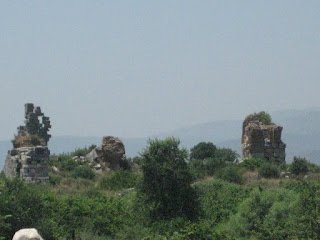
As the cruise trip concluded and we disembarked to Rome, my heart was still hovering over the densely populated coasts and glistening waters of the Mediterranean and Aegean seas, defying space and time to become one in spirit with myriads of people who in the course of time unstoppable had paraded across the stage of history and yet remained vivid and alive in the mysterious faculties of the human mind....

Not this time.
12 days on board the Equinox flew by like a 12-minute merry-go-round, leaving us dazzled and wide-eyed. When it was all over, we left the ship like four little kids leaving a store full of goodies, clamouring for more of the thrills and the sweet moments that had gone by so swiftly.
For one thing, the ship was almost brand new - no more than 3 years old. It was spacious and well-designed, with 13 decks, beautiful staterooms, magnificent venues, fine dining and entertainments, and pleasing interior colors throughout. The feeling was more like staying in the safe and solid confines of a 5-star hotel than being afloat at sea.
More important, however, were the destinations and excursions carefully planned out and organized by Josephine. We stopped over and disembarked at Santorini, Greece; Istanbul, Turkey; Ephesus, Turkey; Athens/Corinth, Greece; Crete, Greece; Naples, Italy; and ended the trip at Rome. The temptation is to write a page or more for each destination, but to keep the length of this post readable I will discipline myself to show only a few pictures and to share some of the highlights and my thoughts. So here we go!
(1) Glimmering white and blue Santorini - it's so Greek!


(2) Istanbul , formerly known as Constantinople in Roman times, was a historic city I had read so much about: its strategic geographical location that spanned over 2 continents - Europe and Asia; its intense rivalry with Rome to become the centre of the Roman Empire; its ancient landmark "Hagia Sophia" - the epitome of Byzantine architecture and the largest cathedral in the world for nearly a thousand years....It's hard to believe but there we were, my family and I, setting foot on this very ancient city, experiencing the riches of its culture and history. Once a glorious Christian cathedral that showcased the world's largest dome and magnificent Christian paintings and mosaics, Hagia Sophia was taken over by the Muslims in 1453 and was converted into a mosque. Believing that human images would constitute idolatry and blasphemy, they covered up all religious art works with a layer of greyish plaster. As a result, the massive building, now a museum, appeared bare and gloomy. My heart sank as I thought of the grandeur and holiness that had once infiltrated the cathedral structure to render so many religious souls in awe and reverence.

(3) We also toured the Blue Mosque, which was located just next to Sophia; and got on board a ferry that took us to the part of Istanbul where "Europe meets Asia".

(4) The rest of our trip was like "a prayerful journey to follow the footsteps of St. Paul": the Arcadian Way and the amphitheater of Ephesus where Paul and his companions had survived unscathed the furious riot of the silversmiths who rose against them to protect the goddess of Artemis (Acts 19);

the Areopagus in Athens where Paul debated the Greek philosophers to help them understand that God, who had revealed Himself through Christ, was not an "Unknown God" (Acts 17:16ff);

the ancient city of Corinth where Paul established the Corinthian church and faced accusation by the Jews at Bema (the tribunal, Acts 18:1-17);

the beautiful little port near Corinth from where Paul set sail to Syria, Ephesus and then to Caesarea and Jerusalem where he was arrested and imprisoned (Acts 18:18-22, 21:1ff); and finally to Rome where he was martyred.

(5) While In Ephesus, we also attended Sunday Mass at the House of Virgin Mary,


As the cruise trip concluded and we disembarked to Rome, my heart was still hovering over the densely populated coasts and glistening waters of the Mediterranean and Aegean seas, defying space and time to become one in spirit with myriads of people who in the course of time unstoppable had paraded across the stage of history and yet remained vivid and alive in the mysterious faculties of the human mind....
Wednesday, June 6, 2012
Is Baptism Needed For Salvation? Part 4: Reconciling the Two Semmingly Contradictory Positions
Are we contradicting ourselves by insisting on the necessity of Baptism and acknowledging at the same time the possibility of salvation for the un-baptized and non-believers? No, what we are saying is that those who “seek God with a sincere heart and, moved by grace, try to do his will as they know it through the dictates of their conscience” may be saved by virtue of their willingness to do God’s will (cf. Lumen Gentium 16, 1 John 5:1-3) even if they haven’t had the opportunity to receive Baptism. For “God has bound salvation to the sacrament of Baptism, but he himself is not bound by his sacraments” (CCC 1258).
Look at it this way: like all the other sacraments, Baptism is a better and more efficacious way for sanctification. “[It] is necessary for salvation for those to whom the Gospel has been proclaimed and who have had the possibility of asking for this sacrament” (CCC 1257, cf. Mark 16:16). But God is just and merciful; he will not penalize those who, through no fault of their own, have been deprived of the grace of hearing the Gospel and receiving Baptism.
The other significance of the fore-mentioned JPII statement is that regardless of one’s religion and belief, if anyone is saved, it’s because of Jesus’ salvific grace. For Jesus is “the way and the truth and the life. No one comes to the Father except through me” (John 14:6). In other words, Jesus’ redemptive sacrifice is necessary for the salvation of the whole world, including the baptized and the un-baptized, the believers and the non-believers, which is why he is the only Mediator between God and men.
It must be added in closing that it will be foolhardy to think that since the un-baptized and non-believers may also be saved, there’s no need to evangelize. The above-mentioned position of the Church does not diminish in any way the need and urgency of proclaiming the Gospel. This is because Jesus’ revelation is “definitive and complete”, made known to the Church “in the fullest possible way”. As a result, “she cannot do other than proclaim...the fullness of the truth which God has enabled us to know about himself” (Congregation for the Doctrine of the Faith, Dominus Iesus, 5) to people all over the world because they still haven’t received the fullest of the truth. And when you don't have the fullest of the truth, which is Christ himself, it's easy to fall prey to the force of evil.
Look at it this way: like all the other sacraments, Baptism is a better and more efficacious way for sanctification. “[It] is necessary for salvation for those to whom the Gospel has been proclaimed and who have had the possibility of asking for this sacrament” (CCC 1257, cf. Mark 16:16). But God is just and merciful; he will not penalize those who, through no fault of their own, have been deprived of the grace of hearing the Gospel and receiving Baptism.
The other significance of the fore-mentioned JPII statement is that regardless of one’s religion and belief, if anyone is saved, it’s because of Jesus’ salvific grace. For Jesus is “the way and the truth and the life. No one comes to the Father except through me” (John 14:6). In other words, Jesus’ redemptive sacrifice is necessary for the salvation of the whole world, including the baptized and the un-baptized, the believers and the non-believers, which is why he is the only Mediator between God and men.
It must be added in closing that it will be foolhardy to think that since the un-baptized and non-believers may also be saved, there’s no need to evangelize. The above-mentioned position of the Church does not diminish in any way the need and urgency of proclaiming the Gospel. This is because Jesus’ revelation is “definitive and complete”, made known to the Church “in the fullest possible way”. As a result, “she cannot do other than proclaim...the fullness of the truth which God has enabled us to know about himself” (Congregation for the Doctrine of the Faith, Dominus Iesus, 5) to people all over the world because they still haven’t received the fullest of the truth. And when you don't have the fullest of the truth, which is Christ himself, it's easy to fall prey to the force of evil.
Subscribe to:
Posts (Atom)